
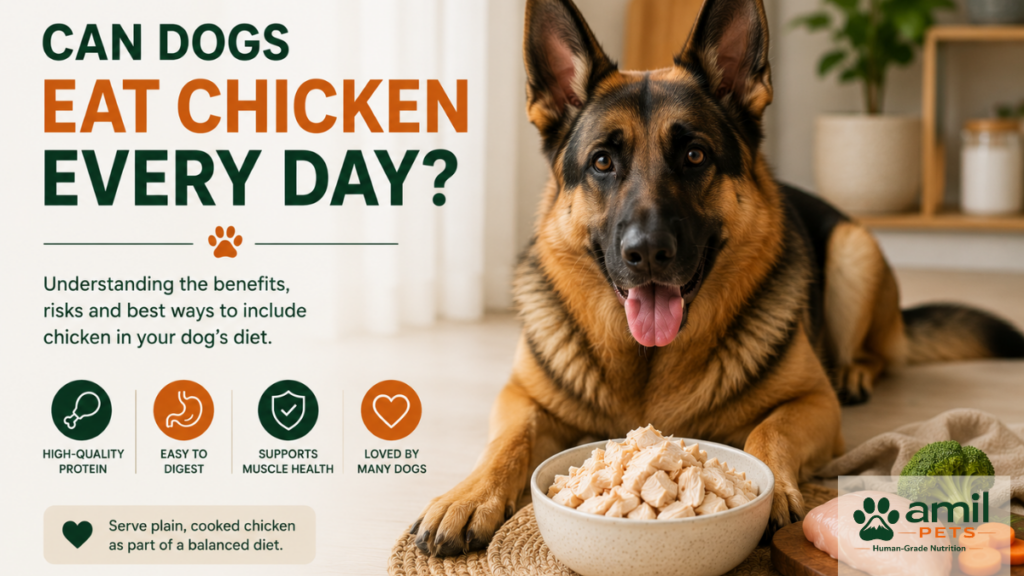
Have ever gogle searched, “Can Dogs Eat Chicken Every Day?”. Well, you are not alone.
Chicken is one of the most popular protein sources found in dog food — and for good reason. It’s highly digestible, rich in essential amino acids and enjoyed by many dogs.
But does that mean your dog can eat chicken every single day? The answer is yes — provided it’s served as part of a complete and balanced diet. Feeding plain chicken alone won’t provide all the nutrients your dog needs, but when included in a balanced feeding plan, it can be an excellent source of high-quality protein.
Key Takeaways
- Chicken is an excellent source of high-quality protein.
- Plain, cooked chicken is generally safe for healthy dogs.
- Chicken should be part of a balanced diet — not the only food.
- Avoid seasoning, onions, garlic and cooked bones.
- Introduce new foods gradually and monitor your dog for any reactions.
🐾 Quick Tip If you’re preparing chicken for your dog, keep it simple. Plain, cooked chicken without salt, spices or sauces is the safest choice.
Why Chicken Is Good for Dogs
Chicken provides several important nutrients that support your dog’s overall health, including high-quality protein for muscle maintenance, B vitamins that support energy metabolism, phosphorus for healthy bones and teeth, and selenium to help support normal immune function. Because it’s easy to digest, chicken is commonly included in many premium dog foods.
Can Chicken Be Fed Every Day?
Yes — but only as part of a nutritionally complete diet. Dogs need much more than protein alone: healthy fats, vitamins, minerals, fibre and essential fatty acids. If your dog eats only chicken, nutritional deficiencies can develop over time.
Fresh Chicken vs Processed Treats
When choosing treats, ingredient quality matters. Look for products made with one clearly identified protein source, no artificial colours, no unnecessary fillers, and no added preservatives where possible. Learn more in Are Single-Ingredient Dog Treats Better? Everything Pet Parents Need to Know.
Foods to Avoid
Never feed your dog cooked chicken bones, chicken seasoned with onions or garlic, fried chicken, highly salted or spicy chicken, or chicken cooked with rich sauces. These can cause digestive problems or more serious health issues — cooked bones in particular can splinter and cause internal injury, and onion/garlic are toxic to dogs even in small amounts.
Healthy Chicken Rewards
For training or occasional rewards, choose treats made from simple, high-quality ingredients. Kuku Bites™ are made from 100% human-grade chicken breast with no fillers, grains or artificial preservatives, making them a convenient reward between meals.
Frequently Asked Questions
Is cooked chicken safe for dogs? Yes. Plain, cooked chicken without seasoning or bones is generally safe for healthy dogs.
Can puppies eat chicken? Yes, provided it’s introduced gradually and forms part of a balanced puppy diet. See Puppy Nutrition Guide: Feeding Your Puppy for Healthy Growth.
Can dogs eat chicken every day? Yes, if it’s included as part of a complete and balanced diet that provides all essential nutrients.
Can dogs eat raw chicken? Opinions vary. Raw diets carry potential risks, including bacterial contamination such as Salmonella and Campylobacter. Speak with your veterinarian before choosing a raw feeding approach.
What is the healthiest way to feed chicken? Plain, thoroughly cooked chicken with no seasoning, sauces or cooked bones.
Continue Learning
- Why Protein Matters in Your Dog’s Diet
- How to Read a Pet Food Label: 10 Things Every Kenyan Pet Parent Should Check
- Are Single-Ingredient Dog Treats Better? Everything Pet Parents Need to Know
- How Many Treats Can I Give My Dog Per Day?
- Puppy Nutrition Guide: Feeding Your Puppy for Healthy Growth
- Bone Broth for Dogs and Cats: Benefits, How Much to Give & How to Serve It
Give Your Dog the Best Nutrition
Chicken is a nutritious, protein-rich ingredient that many dogs thrive on when it’s part of a balanced diet. By choosing wholesome foods and simple, high-quality treats, you can support your dog’s health while making every mealtime enjoyable.
Foodborne risk notes (onion/garlic toxicity, cooked bone splintering, raw-feeding bacterial risk) reflect widely published veterinary food-safety guidance, including cautions issued by the American Veterinary Medical Association (AVMA) and the ASPCA Animal Poison Control Center. This article is educational and not a substitute for individualised veterinary advice.