
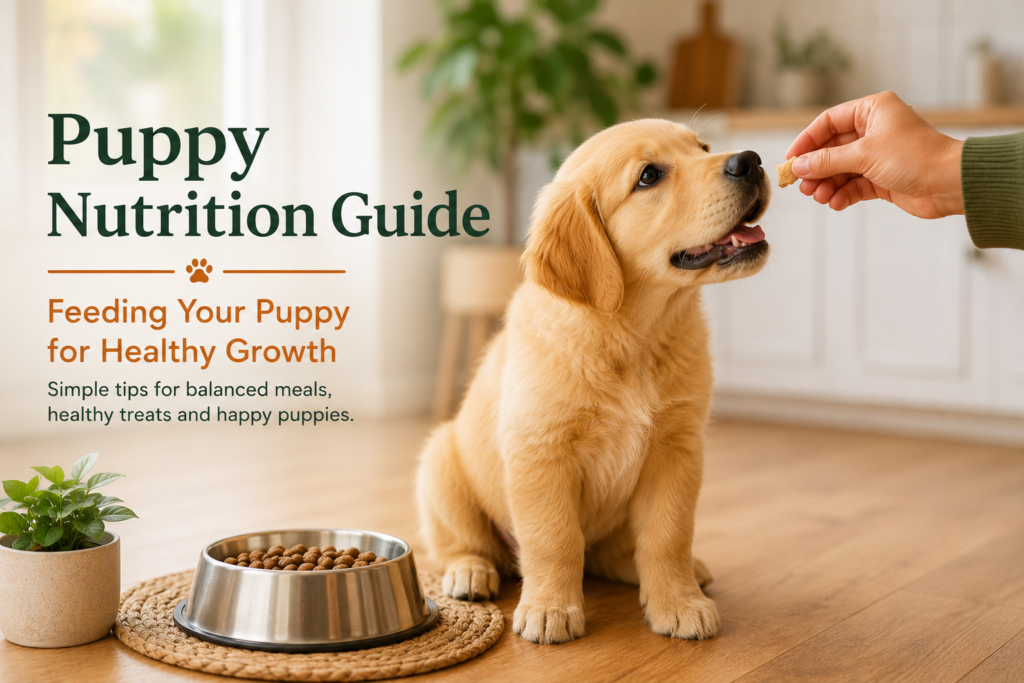
Bringing home a new puppy is an exciting milestone, but it also comes with an important responsibility — providing the right nutrition during the early stages of life.
A puppy’s body develops rapidly during the first year. Strong bones, healthy muscles, brain development and a resilient immune system all depend on balanced nutrition and good feeding habits.
Whether you’re welcoming your first puppy or adding another companion to your family, this guide will help you understand what to feed, how often to feed, and how to establish healthy eating habits from the very beginning.
Key Takeaways
✅ Puppies need balanced nutrition to support rapid growth and development.
✅ Feed smaller meals several times a day rather than one large meal.
✅ Fresh, clean water should always be available.
✅ Healthy treats should be given in moderation and used for training.
✅ Introduce new foods gradually to avoid digestive upset.
🐾 Quick Tip Good nutrition starts with consistency. Feed your puppy at the same times each day and avoid changing foods suddenly unless advised by your veterinarian.
Why Puppy Nutrition Matters
During their first year, puppies grow faster than at any other stage of life. Their bodies require the right balance of protein, fats, vitamins and minerals to support healthy development.
Building Strong Bones and Muscles
Protein provides the building blocks needed for healthy muscles, tissues and organs, while calcium and phosphorus support the development of strong bones and teeth. As puppies grow, these nutrients help them stay active and support healthy movement.
(This is also the exact reasoning behind Kuku Cal-Phos™, our natural calcium and phosphorus supplement made from 100% human-grade chicken bones — worth a look once your vet has confirmed your puppy’s diet needs supplementing.)
Supporting Brain Development
Healthy fats play an important role in brain and vision development, particularly during the first few months of life. Balanced nutrition helps puppies learn, explore and adapt to new experiences.
Developing a Healthy Immune System
A nutritious diet also supports your puppy’s natural immune system, helping them stay healthy as they grow.
How Often Should You Feed Your Puppy?
Puppies have small stomachs but high energy needs, so they benefit from several smaller meals throughout the day.
| Puppy Age | Recommended Meals Per Day |
|---|---|
| 8–12 weeks | 4 meals |
| 3–6 months | 3 meals |
| 6–12 months | 2 meals |
As your puppy grows, meal frequency gradually decreases while portion sizes increase. Always follow the feeding guide provided with your chosen puppy food and adjust according to your veterinarian’s advice.
What Should Puppies Eat?
A healthy puppy diet starts with a complete and balanced puppy food designed for growth. Look for products that provide:
- High-quality animal protein
- Balanced vitamins and minerals
- Appropriate calcium and phosphorus levels
- Clearly identified ingredients
- Feeding guidelines
If you’re unsure how to evaluate ingredient lists, read our guide on How to Read a Pet Food Label: 10 Things Every Kenyan Pet Parent Should Check.
Fresh Water Is Essential
Growing puppies are naturally active and can become dehydrated quickly. Always provide access to fresh, clean drinking water throughout the day. Water bowls should be cleaned daily and refilled regularly.
Choosing Healthy Puppy Treats
Treats are a valuable part of training, but they should complement — not replace — a balanced diet. When selecting treats, look for:
- Clearly identified ingredients
- High-quality animal protein
- No unnecessary fillers
- No artificial colours or flavours
Single-ingredient treats are often an excellent choice because they’re simple and easy to understand. Our article Are Single-Ingredient Dog Treats Better? Everything Pet Parents Need to Know explains what to look for when choosing natural treats.
For training sessions, Kuku Bites™ can easily be broken into small pieces, allowing you to reward your puppy frequently without overfeeding. For more on freeze-dried textures specifically, see our Freeze-Dried Dog Treats Kenya | Complete Buying Guide.
Can Puppies Have Bone Broth?
Yes — once puppies have comfortably transitioned to solid food, pet-safe bone broth can be introduced gradually. Bone broth can help:
- Encourage hydration
- Make meals more appealing
- Add flavour to dry kibble
- Support a varied feeding routine
Kuku Broth™ Powder can be mixed with warm water or sprinkled over food as a convenient meal topper. Learn more in our guide to Bone Broth for Dogs and Cats: Benefits, How Much to Give & How to Serve It.
💡 Remember Bone broth is a supplement or food topper. It should never replace a complete and balanced puppy food.
Common Puppy Feeding Mistakes
Even well-meaning pet parents sometimes make feeding mistakes. Avoid these common habits:
Overfeeding — Giving too much food or too many treats can lead to excessive weight gain.
Feeding Too Many Treats — Treats should generally account for no more than 10% of your puppy’s daily calorie intake.
Offering Human Foods — Many foods prepared for people contain ingredients that aren’t suitable for dogs. Choose healthy treats made specifically for pets instead.
Changing Foods Too Quickly — When introducing a new food, do so gradually over several days to reduce the risk of digestive upset.
Signs Your Puppy Is Growing Well
Every puppy develops at its own pace, but healthy growth is often accompanied by:
- Bright, alert eyes
- A shiny, healthy coat
- Steady weight gain
- Good energy levels
- A healthy appetite
- Regular play and curiosity
If you notice sudden weight loss, poor appetite or persistent digestive issues, consult your veterinarian.
Frequently Asked Questions
How much should I feed my puppy? The correct amount depends on your puppy’s age, breed, size and activity level. Always follow the feeding guide on your chosen puppy food and adjust if recommended by your veterinarian.
When can puppies start eating treats? Most puppies can begin enjoying small treats once they are eating solid food comfortably. Choose treats appropriate for their age and size.
Can puppies eat chicken treats? Yes. Simple chicken treats made from quality ingredients can make excellent training rewards when fed in moderation.
Is bone broth safe for puppies? Pet-safe bone broth can be introduced gradually once puppies are eating solid food. Avoid broths containing onion, garlic or added salt.
How much water should a puppy drink? Puppies should have access to fresh water at all times. The amount they drink varies depending on age, activity level and weather conditions.
Continue Learning
Continue building your puppy care knowledge with these guides from the Amil Pets Learning Centre:
- Human-Grade Pet Food in Kenya: What It Really Means (And Why It Matters)
- How to Read a Pet Food Label: 10 Things Every Kenyan Pet Parent Should Check
- Are Single-Ingredient Dog Treats Better? Everything Pet Parents Need to Know
- Bone Broth for Dogs and Cats: Benefits, How Much to Give & How to Serve It
- Freeze-Dried Dog Treats Kenya | Complete Buying Guide
Give Your Puppy the Best Start
Healthy habits begin with good nutrition. By providing balanced meals, fresh water and healthy treats in moderation, you’re helping your puppy build the foundation for a happy and active life.
At Amil Pets, we believe simple, wholesome nutrition supports healthy growth from puppyhood onwards. Explore our range of natural treats and meal toppers designed to complement your puppy’s everyday feeding routine.