
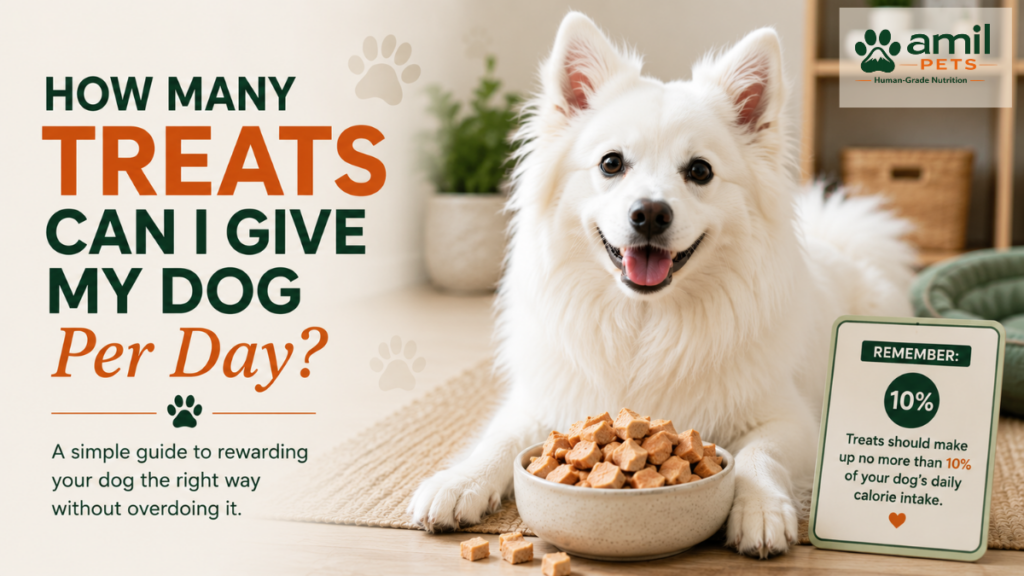
Treats are a wonderful way to reward good behaviour, strengthen your bond with your dog and make training more enjoyable. But even healthy treats should be fed in moderation.
Many pet parents wonder how many treats are too many. The answer depends on your dog’s size, age, activity level and overall diet. By understanding the role treats should play in your dog’s daily nutrition, you can reward your companion while helping them maintain a healthy weight.
Key Takeaways
- Treats should make up no more than 10% of your dog’s daily calorie intake.
- Choose high-quality treats made from simple ingredients.
- Adjust portion sizes based on your dog’s size and activity level.
- Break treats into smaller pieces during training.
- Reduce meal portions if treats are given frequently.
🐾 Quick Tip During training, use tiny treat pieces. Your dog cares more about the reward itself than the size of each bite.
Why Moderation Matters
Even nutritious treats contain calories. Giving too many can contribute to weight gain, reduced appetite at mealtimes, digestive upset, and nutritional imbalance. Treats should supplement a complete and balanced diet — not replace regular meals.
The 10% Rule
Veterinary nutritionists commonly recommend that treats account for no more than 10% of your dog’s daily calorie intake, with the remaining 90% coming from a complete and balanced dog food. This guideline helps ensure your dog gets all the essential nutrients they need while still enjoying occasional rewards.
How Treat Portions Vary by Dog Size
| Dog Size | Suggested Daily Treats* |
|---|---|
| Small (under 10 kg) | 2–4 small pieces |
| Medium (10–25 kg) | 4–8 small pieces |
| Large (25 kg+) | 6–10 small pieces |
*General guidelines — adjust based on activity level and treat size.
Training Sessions
Training often calls for many rewards. Instead of offering whole treats, break them into tiny pieces, reward frequently for desired behaviours, and keep sessions short and positive. Small rewards reduce calorie intake while keeping your dog motivated.
Choosing Healthy Treats
Not all treats are created equal. Look for treats that are made from identifiable ingredients, free from unnecessary fillers, grain-free if appropriate for your dog, and free from artificial colours and preservatives. Simple ingredient lists also make it easier to identify food sensitivities. Learn more in Are Single-Ingredient Dog Treats Better? Everything Pet Parents Need to Know.
A Simple Reward Option
Our Kuku Bites™ are made from 100% human-grade chicken breast with no fillers, grains or artificial preservatives. Because they’re made from a single ingredient, they break easily into smaller pieces for everyday training.
Signs You’re Giving Too Many Treats
Watch for weight gain, less interest in regular meals, digestive upset, or treats effectively replacing balanced meals. If you notice these signs, reduce treat portions and consult your veterinarian if needed.
Frequently Asked Questions
Can I give my dog treats every day? Yes, provided they’re fed in moderation and form only a small part of your dog’s daily calorie intake.
Can puppies have treats? Yes, once they’re old enough and eating solid food. Choose treats appropriate for their age and size. See When Can Puppies Start Eating Treats? A Complete Guide.
Are single-ingredient treats healthier? Many pet owners prefer them because they contain fewer ingredients and are easier to understand and trace back if a reaction occurs.
Should I reduce my dog’s meals if I give treats? If treats are given regularly, slightly reducing meal portions may help maintain a healthy weight. Speak with your veterinarian if you’re unsure.
Can treats replace meals? No. Treats are rewards and should never replace a complete and balanced diet.
Continue Learning
- Are Single-Ingredient Dog Treats Better? Everything Pet Parents Need to Know
- How to Read a Pet Food Label: 10 Things Every Kenyan Pet Parent Should Check
- Why Protein Matters in Your Dog’s Diet
- Puppy Nutrition Guide: Feeding Your Puppy for Healthy Growth
- How Your Dog’s Nutritional Needs Change with Age
- Bone Broth for Dogs and Cats: Benefits, How Much to Give & How to Serve It
Reward Responsibly
Treats are one of the easiest ways to build trust, reinforce good behaviour and make training fun. By choosing nutritious treats and feeding them in moderation, you can reward your dog while supporting their long-term health.
Based on general veterinary nutrition guidance on treat-to-diet calorie ratios (the “10% rule”), including recommendations reflected in the WSAVA Global Nutrition Toolkit and FEDIAF Nutritional Guidelines. This article is educational and not a substitute for individualised veterinary advice.