
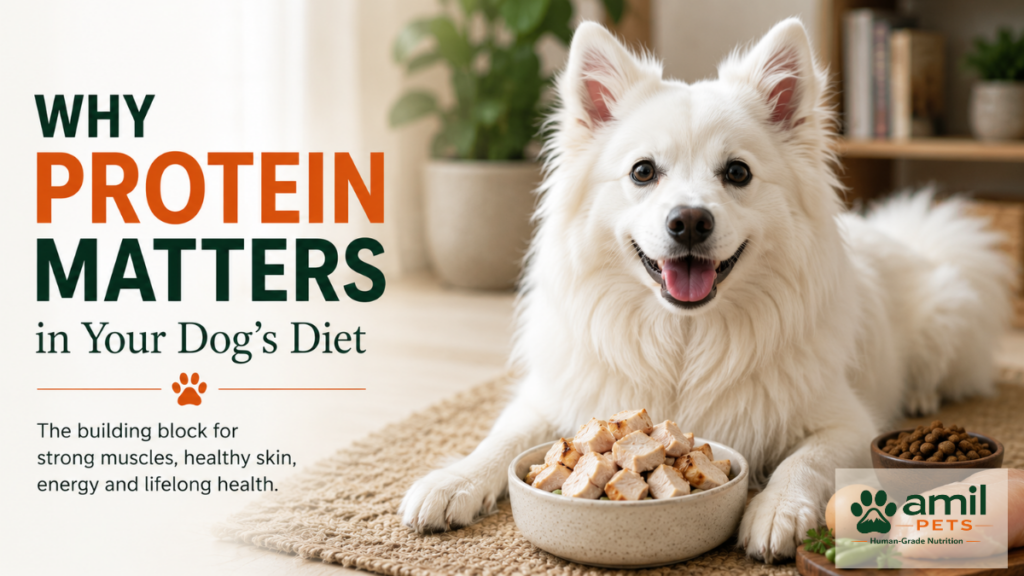
Protein is one of the most important nutrients your dog needs every day. From energetic puppies to active adults and ageing seniors, protein supports healthy muscles, organs, skin, coat and the immune system.
Despite its importance, many pet parents aren’t sure how much protein their dog actually needs, or how to recognise good-quality protein in pet food. Understanding protein’s role helps you make better feeding decisions at every life stage.
Key Takeaways
- Protein builds and repairs muscles and body tissues.
- Dogs need high-quality protein throughout every life stage, not just as puppies.
- Animal proteins provide the essential amino acids dogs need.
- Protein also supports healthy skin, coat, immune function and energy.
- Choose foods with clearly identifiable, high-quality protein sources.
🐾 Quick Tip Protein isn’t just for active or working dogs — every dog needs an adequate, consistent daily supply to maintain healthy muscles, organs and body function.
What Does Protein Do?
Protein is made up of amino acids — the building blocks your dog’s body uses to grow, repair and maintain tissue. Unlike carbohydrates and fat, dogs can’t store large reserves of protein for later use, so it needs to come from the diet consistently, every day.
Protein supports:
- Muscle growth and maintenance
- Healthy skin and a shiny coat
- Hormone production
- Enzyme function
- Immune health
- Tissue repair after illness or injury
Without enough protein, dogs may lose muscle mass, develop a dull coat, and recover more slowly from illness or injury.
Why High-Quality Protein Matters
Not all protein sources offer the same nutritional value. High-quality animal proteins provide the essential amino acids dogs need in forms that are easy to digest and absorb. Strong protein sources include chicken, turkey, beef, fish and eggs.
Foods built around clearly identified meat ingredients generally provide better, more traceable nutrition than products leaning on fillers or vaguely defined “meat by-products.” If you’re not sure how to evaluate an ingredient list, our guide How to Read a Pet Food Label: 10 Things Every Kenyan Pet Parent Should Check walks through exactly what to look for.
Protein Needs Change with Age
Protein isn’t a flat, one-size-fits-all number — how much a dog needs, and how it’s used, shifts across life stages.
Puppies need more protein to support rapid growth, bone development, muscle formation and a developing immune system. See our Puppy Nutrition Guide: Feeding Your Puppy for Healthy Growth for a full breakdown.
Adult dogs need enough protein to maintain lean muscle, repair everyday tissue wear, and stay energetic. Dogs that exercise regularly or work (herding, sport, service roles) often benefit from higher-quality protein sources to support recovery.
Senior dogs naturally lose muscle mass with age. Contrary to a common myth, healthy seniors often benefit from more attention to protein quality, not less — highly digestible protein helps preserve muscle and mobility later in life. See How Your Dog’s Nutritional Needs Change with Age for the full picture across all three stages.
Signs Your Dog May Need Better Protein
Every dog is different, but a diet with poor-quality protein may show up as:
- Loss of muscle tone
- Poor overall body condition
- Dull coat or dry skin
- Slow wound healing
- Reduced energy levels
If you notice these signs, speak with your veterinarian before making any significant dietary change — they can rule out underlying medical causes first.
Protein and Healthy Treats
Treats should complement a balanced diet, not replace it. Choosing treats made from a single, identifiable ingredient makes it easy to know exactly what your dog is eating — and easy to trace back if something doesn’t agree with them.
Kuku Bites™ are made from 100% human-grade chicken breast, with no artificial preservatives, fillers or grains.
You may also want to read Are Single-Ingredient Dog Treats Better?
Protein and Recovery
Dogs recovering from surgery, illness or intense activity often have increased protein needs to help repair damaged tissue and preserve lean muscle. Always follow your veterinarian’s specific recommendations during recovery — this matters even more if your dog has a condition affecting the kidneys or liver, where protein type and amount may need to be managed carefully.
Common Protein Myths
“Too much protein damages healthy kidneys.” There’s no strong evidence that appropriate protein levels harm the kidneys of healthy dogs. Dogs with diagnosed kidney disease may need a special vet-prescribed diet — but that’s a medical exception, not a general rule for healthy dogs.
“Older dogs need less protein.” The opposite is usually closer to true. Healthy senior dogs often benefit from continued high-quality, digestible protein to help maintain muscle and body condition as they age.
“Plant protein is the same as meat protein.” Plant ingredients can contribute some protein, but animal proteins generally provide a more complete amino acid profile for dogs, which is why they remain the foundation of a quality canine diet.
Frequently Asked Questions
Why is protein important for dogs? Protein supports muscle growth, tissue repair, immune function, healthy skin and coat, hormone production, and overall health at every life stage.
What are good sources of protein for dogs? Chicken, turkey, fish, beef and eggs are all excellent, highly digestible protein sources for dogs.
Can dogs eat too much protein? Healthy dogs generally tolerate appropriate protein levels well. Dogs with specific medical conditions, such as kidney disease, should follow their vet’s dietary guidance.
Do puppies need more protein than adult dogs? Yes — puppies need additional protein to support their rapid growth and development.
Are single-ingredient treats a good source of protein? Yes. Single-ingredient treats made from quality meat, like Kuku Bites™, provide a simple, protein-rich reward when given in moderation.
Continue Learning
- Human-Grade Pet Food in Kenya: What It Really Means
- How to Read a Pet Food Label: 10 Things Every Kenyan Pet Parent Should Check
- Are Single-Ingredient Dog Treats Better?
- How Your Dog’s Nutritional Needs Change with Age
- Puppy Nutrition Guide: Feeding Your Puppy for Healthy Growth
- Bone Broth for Dogs and Cats: Benefits, How Much to Give & How to Serve It
Give Your Dog the Building Blocks for a Healthy Life
Protein is far more than just another line on the label — it’s essential to your dog’s growth, strength and overall wellbeing. Choosing foods and treats built around high-quality protein sources supports healthy muscles, a shiny coat, strong immunity, and an active life at every stage.
Based on established companion animal nutrition guidance, including the WSAVA Global Nutrition Toolkit, AAFCO Dog and Cat Food Nutrient Profiles, FEDIAF Nutritional Guidelines, and the National Research Council’s Nutrient Requirements of Dogs and Cats. This article is for general educational purposes and isn’t a substitute for individual veterinary advice, particularly for dogs with diagnosed kidney, liver or other medical conditions.