
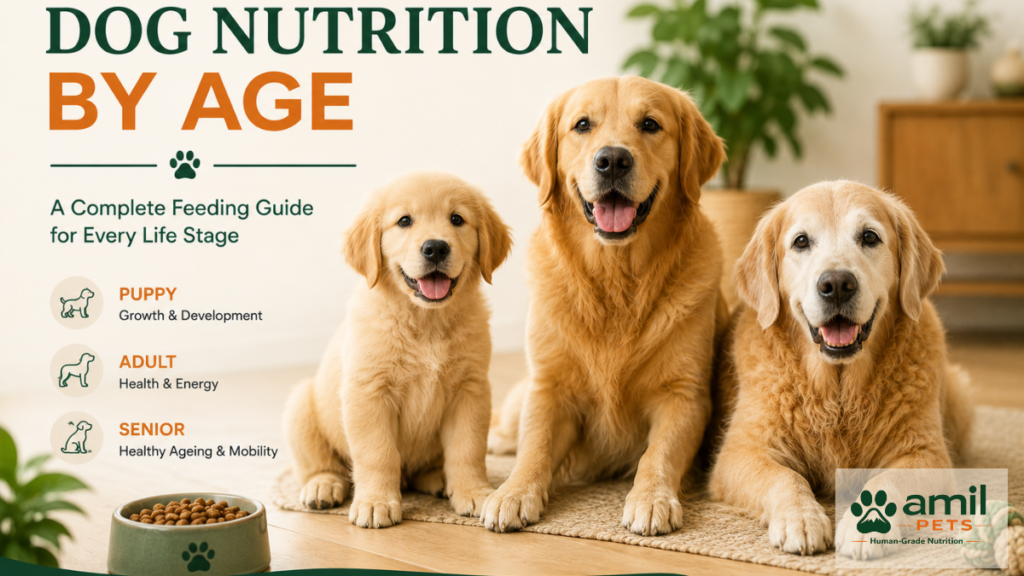
Your dog’s nutritional needs don’t stay the same throughout life. A growing puppy needs nutrients to build strong bones and muscles. An active adult dog needs balanced nutrition to maintain energy and a healthy weight. As dogs age, metabolism slows and many benefit from diets that support healthy ageing, joint mobility and hydration. This guide explains what changes at each stage — and what to do about it.
Key Takeaways
- Puppies need nutrient-rich diets to support rapid growth.
- Adult dogs need balanced nutrition to maintain healthy body condition, not more food.
- Senior dogs often need fewer calories but the same high-quality protein.
- Every food transition should happen gradually over 5–7 days.
- The right diet depends on age, breed, activity level and health — not age alone.
🐾 Quick Tip Don’t wait until your dog is overweight to review their diet. Regularly checking body condition and adjusting portions early prevents many nutrition-related problems.
Dog Nutrition by Life Stage
| Life Stage | Primary Nutrition Goal | Typical Meals/Day |
|---|---|---|
| Puppy | Growth & development | 3–4 |
| Adult | Healthy weight & energy | 2 |
| Senior | Healthy ageing & mobility | 2 |
These are starting points — breed, size, activity and medical conditions all shift the specifics.
Puppyhood (0–12 Months)
The first year is the fastest growth period your dog will ever go through. Puppies need a diet that supports muscle development, bone formation, brain development, immunity and digestion. High-quality protein builds growing tissue; healthy fats fuel brain and eye development; balanced calcium and phosphorus build strong bones and teeth. Puppies typically need two to three times more energy per kilogram than adult dogs, which is why puppy food is formulated differently from adult maintenance food.
Good habits started here tend to stick for life: consistent meal times, constant fresh water, minimal table scraps, and using small, appropriate treats for training rather than free feeding. If you’re unsure when to start treats, see When Can Puppies Start Eating Treats? A Complete Guide — it covers the safest starting age and how to introduce them gradually. Kuku Bites™ break easily into small pieces, making portion control simple during training.
For a full breakdown of feeding schedules and portion sizes, see our Puppy Nutrition Guide: Feeding Your Puppy for Healthy Growth, and for more on why ingredient sourcing matters at this stage, read Human-Grade Pet Food in Kenya: What It Really Means.
Watch for the signs of healthy growth — bright eyes, a shiny coat, steady weight gain, good appetite and playful energy. Sudden weight loss or persistent digestive upset is a reason to call your vet before changing anything yourself.
Adulthood (1–7 Years)
Once growth stops, nutritional priorities shift from building to maintaining. Overfeeding — including too many treats — is the most common mistake here, since puppyhood feeding habits often continue out of routine rather than need.
Judge weight by Body Condition Score, not appearance alone. A healthy adult dog should have:
- A visible waist viewed from above
- A slight abdominal tuck
- Ribs you can feel easily under a thin layer of fat
If your dog is gaining weight on the same food amount, review treat frequency, exercise, portion sizes and any age- or health-related changes with your vet.
Protein stays just as important in adulthood as in puppyhood — it maintains muscle, supports tissue repair, skin health and immunity. Focus on protein quality, not just the percentage on the label; our guide How to Read a Pet Food Label: 10 Things Every Kenyan Pet Parent Should Check walks through exactly what to look for, and Are Single-Ingredient Dog Treats Better? covers why ingredient simplicity matters for everyday treats like Kuku Bites™.
Senior Years (7+)
Ageing doesn’t automatically mean declining health — but metabolism does slow, and many senior dogs burn fewer calories than they did as adults. Left unadjusted, this leads to gradual weight gain. The goal isn’t feeding less across the board, it’s feeding smarter: continued high-quality protein, adjusted calories, and support for the changes that come with age.
Common age-related changes include reduced activity, stiffer joints, dental wear, reduced appetite, more sleep, and a greater need for hydration. These are normal, but sudden or severe changes should always go to your vet first.
Some older dogs drink less than they should. A warm topper made from Kuku Broth™ Powder mixed with warm water adds both flavour and moisture to meals — see our guide Bone Broth for Dogs and Cats: Benefits, How Much to Give & How to Serve It for more. Bone health also remains important with age; under veterinary guidance, Kuku Cal-Phos™ can complement a balanced diet with naturally sourced chicken bone meal.
Watch for unexplained weight change, low energy, persistent digestive upset, a dull coat, or reduced enthusiasm at mealtimes — worth a vet visit rather than a DIY diet change.
When Should You Change Your Dog’s Food?
| Transition | Typical Age* |
|---|---|
| Puppy → Adult | 12–24 months |
| Adult → Senior | ~7–10 years |
*Large and giant breeds mature more slowly and often reach senior years earlier than small breeds.
Whenever you switch foods: mix a small amount of the new food into the current one, increase it gradually over 5–7 days, and watch stool quality and appetite. Avoid sudden switches unless your vet advises otherwise.
Products That Support Every Life Stage
Amil Pets products are built to complement a balanced diet at any stage, not replace it. Kuku Bites™ — single-ingredient human-grade chicken breast — works well for puppy training through everyday adult rewards. Kuku Broth™ Powder is an easy meal topper for hydration and picky eaters, especially useful for seniors. Kuku Cal-Phos™ is a natural chicken bone meal calcium source, suitable under veterinary guidance across life stages.
Frequently Asked Questions
How do my dog’s nutritional needs change with age? Puppies need more energy and nutrients for growth; adults need balanced maintenance nutrition; seniors often need fewer calories but the same high-quality protein and extra support for healthy ageing.
At what age should I switch from puppy to adult food? Usually between 12 and 24 months, depending on breed size — larger breeds mature more slowly.
When is a dog considered a senior? Generally between 7 and 10 years, though giant breeds often reach senior years earlier.
Do senior dogs need less protein? Not necessarily — protein remains important for maintaining muscle mass. Focus on protein quality rather than cutting it back.
How can I tell if my dog is overweight? Check for a visible waist from above, a slight abdominal tuck, and ribs you can feel under a thin layer of fat — or ask your vet for a Body Condition Score assessment.
How should I transition to a new food? Gradually, over 5–7 days, mixing increasing amounts of the new food with the old to reduce digestive upset.
Continue Learning
- Puppy Nutrition Guide: Feeding Your Puppy for Healthy Growth
- When Can Puppies Start Eating Treats? A Complete Guide
- Human-Grade Pet Food in Kenya: What It Really Means
- How to Read a Pet Food Label: 10 Things Every Kenyan Pet Parent Should Check
- Are Single-Ingredient Dog Treats Better?
- Bone Broth for Dogs and Cats: Benefits, How Much to Give & How to Serve It
Give Your Dog the Right Nutrition at Every Age
From playful first steps to golden senior years, every stage deserves thoughtful nutrition. Balanced meals, a healthy body condition, and feeding routines that adjust as your dog grows are what support a long, healthy life.
Based on established companion animal nutrition guidance, including WSAVA’s Global Nutrition Toolkit, AAHA Nutritional Assessment Guidelines, FEDIAF Nutritional Guidelines, and NRC Nutrient Requirements of Dogs and Cats.