
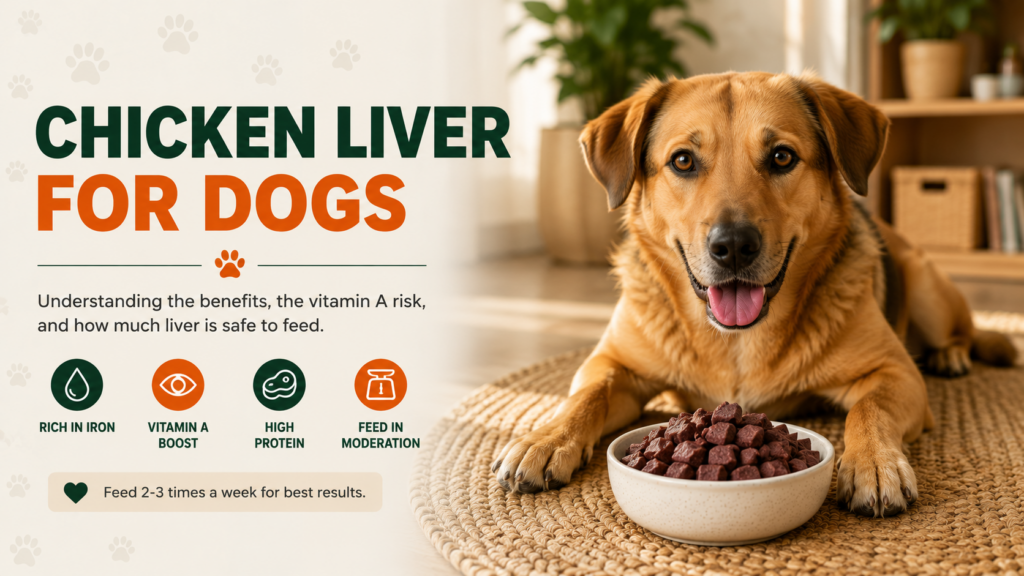
If you’ve ever watched a dog lose its mind over a piece of liver, you already know it’s one of the most irresistible things you can put in a bowl. But “dogs love it” and “it’s good for them” aren’t always the same thing — and liver is one of those foods where the dose really does make the poison. In this guide, you’ll learn what chicken liver actually does for your dog, where the real risk lies, exactly how much is safe, and how it compares to other single-ingredient treats like Kuku Bites™ and Savanna™ Chicken Gizzard.
Why Dogs Go Crazy for Liver
Liver is an organ meat, and organ meats are nutritionally dense in a way muscle meat simply isn’t. A small piece of chicken liver punches far above its weight nutritionally, which is exactly why it’s used as a “high-value” reward by professional trainers — a tiny piece delivers an outsized flavour payoff.
| Nutrient | Why It Matters |
|---|---|
| Vitamin A | Supports vision, skin health and immune function |
| Iron | Supports healthy red blood cells and energy levels |
| B Vitamins (esp. B12) | Supports nerve function and metabolism |
| Protein | Highly digestible, low-fibre, complete amino acid profile |
The Real Benefit: It’s Not Just a Treat
Because liver is so nutrient-rich, a modest amount added occasionally to a balanced diet can genuinely support:
- Coat and skin condition, thanks to vitamin A and essential fatty acids
- Energy and stamina, through highly bioavailable iron (more easily absorbed than iron from plant sources)
- Muscle and immune support, through complete, easily digested protein
This is why single-ingredient, freeze-dried liver treats — like Amil Pets’ Savanna™ Chicken Liver — have become popular with Kenyan pet owners: they let you give a genuinely nutritious treat, not just an empty calorie.
The Risk Nobody Talks About: Vitamin A Toxicity
Here’s the part that matters most. Vitamin A is fat-soluble, which means your dog’s body stores the excess rather than flushing it out through urine the way it would with a water-soluble vitamin. Feed too much liver too often, and that vitamin A can build up to toxic levels over weeks or months — a condition veterinarians call hypervitaminosis A.
Signs of vitamin A toxicity can include:
- Stiff, painful joints and bone spurs (especially around the neck and spine)
- Weight loss and reduced appetite
- Dry, flaky skin
- Lethargy
This isn’t a reason to avoid liver altogether — plenty of dogs eat it regularly with no issue at all. It’s a reason to treat it like the concentrated ingredient it is, not an everyday staple. For a deeper look at safe nutrient dosing in dogs generally, the World Small Animal Veterinary Association (WSAVA) publishes global nutrition guidelines that vets reference for exactly this kind of question.
How Much Chicken Liver Is Safe for Dogs?
As a general guide for healthy adult dogs:
| Dog Size | Approx. Liver Treat Guide |
|---|---|
| Small (under 10kg) | 1–2 small pieces, 2–3 times per week |
| Medium (10–25kg) | 2–4 small pieces, 2–3 times per week |
| Large (over 25kg) | 4–6 small pieces, 2–3 times per week |
A good rule of thumb: liver, and any organ meat, should make up no more than 5–10% of your dog’s total weekly treat allowance — echoing the same 10% treat rule that applies to treats generally. If your dog already eats a commercial diet that includes organ meat (check the ingredients list — most complete dry foods do include some liver or “animal digest”), factor that in and feed liver treats a little more sparingly on top.
Puppies, pregnant or nursing dogs, and dogs with existing liver or kidney conditions should only be given liver under veterinary guidance, since their tolerance for concentrated vitamin A is lower. If you’re navigating feeding decisions during pregnancy, our guide on nutrition for pregnant and nursing dogs covers this in more detail.
Cooked, Freeze-Dried, or Raw — Does Preparation Matter?
Yes, and it matters for two different reasons: safety and nutrient retention.
- Cooked liver (boiled or baked, no seasoning, no oil, no garlic or onion) is the safest home-preparation method, though some heat-sensitive nutrients are reduced.
- Freeze-dried liver removes moisture at low temperature, which preserves far more of the natural nutrient profile than cooking while still being shelf-stable and easy to portion — this is why it’s the format most premium single-ingredient treats use.
- Raw liver carries a higher risk of bacterial contamination (Salmonella, E. coli) and should only be fed as part of a properly managed raw diet, with strict hygiene practices, ideally discussed with your vet first.
Liver vs. Other Single-Ingredient Treats
If you’re rotating treats for variety, it helps to know how liver compares to the rest of the range:
- Chicken breast (like Kuku Bites™) — leaner, lower in vitamin A, a safer everyday option you can feed daily without the toxicity concern
- Chicken liver (like Savanna™ Chicken Liver) — highest reward value, best used as an occasional high-value treat or training reward
- Chicken gizzard (like Savanna™ Chicken Gizzard) — high protein with a chewier texture, good for dogs who enjoy working a treat a little longer, and lower in vitamin A than liver
Rotating between a lean everyday treat and an occasional liver treat gives you the best of both worlds — daily reward without daily vitamin A load.
How to Introduce Liver Into Your Dog’s Diet for the First Time
Even a nutritious food can cause a temporary upset stomach if introduced too quickly, especially something as rich as liver. A sensible first introduction looks like this:
- Start with a single small piece — smaller than the portions in the table above — and wait 24 hours to watch for any digestive reaction.
- Introduce it away from other new foods, so if a reaction does occur, you know exactly what caused it.
- Build up gradually to the full recommended portion over one to two weeks, rather than jumping straight in.
- Keep a simple log the first few times — stool consistency and energy levels are the easiest early indicators that something isn’t agreeing with your dog.
Dogs with sensitive stomachs, or those transitioning from a very plain diet, sometimes benefit from an even slower introduction than dogs already used to a varied diet.
Common Myths About Feeding Liver to Dogs
Myth: “Liver is bad for dogs and should be avoided.” Not true — in appropriate amounts, liver is one of the more nutrient-dense foods you can offer. The issue is quantity and frequency, not the ingredient itself.
Myth: “If a little is good, more is better.” This is exactly backwards with liver, precisely because of the vitamin A storage issue explained above. More is not better once you’re past the recommended weekly amount.
Myth: “Raw liver is always healthier than cooked or freeze-dried.” Raw liver does retain more heat-sensitive nutrients, but it also carries a materially higher bacterial risk. For most home feeders, cooked or properly freeze-dried liver is the more practical, lower-risk choice without a meaningful nutritional trade-off.
Myth: “All organ meats carry the same risk.” Vitamin A concentration varies significantly between organs — liver is particularly high, while something like gizzard (mostly muscle tissue) carries a much lower vitamin A load, which is why it can be fed more liberally.
Frequently Asked Questions
Can dogs eat chicken liver every day?
It’s not recommended. Even though liver is nutritious, daily feeding is the most common way vitamin A builds up to unsafe levels over time. Two to three times a week, in the portions above, is a safer routine for most dogs.
Is cooked or raw chicken liver better for dogs?
Cooked (plain, unseasoned) is safer for most home feeders because it eliminates the bacterial risk associated with raw meat. Freeze-dried liver treats offer a good middle ground — better nutrient retention than cooking, without the handling risks of raw.
Can puppies eat chicken liver?
In small amounts occasionally, yes — but puppies are more sensitive to vitamin A excess during their rapid bone growth phase, so it’s best to check with your vet on quantity and frequency, especially for large-breed puppies.
What are the signs of too much liver in a dog’s diet?
Watch for stiff or painful joints, reduced appetite, dry or flaky skin, and lethargy. These can indicate vitamin A toxicity from prolonged overfeeding and warrant a vet visit.
Foodborne risk notes (onion/garlic toxicity, cooked bone splintering, raw-feeding bacterial risk) reflect widely published veterinary food-safety guidance, including cautions issued by the American Veterinary Medical Association (AVMA) and the ASPCA Animal Poison Control Center. This article is educational and not a substitute for individualised veterinary advice.